Voyager platforms

A practical foundation for your USV

Voyager hulls are designed around modular propulsion, control, communication and payload interfaces so teams can move from integration to field trials with fewer custom dependencies.

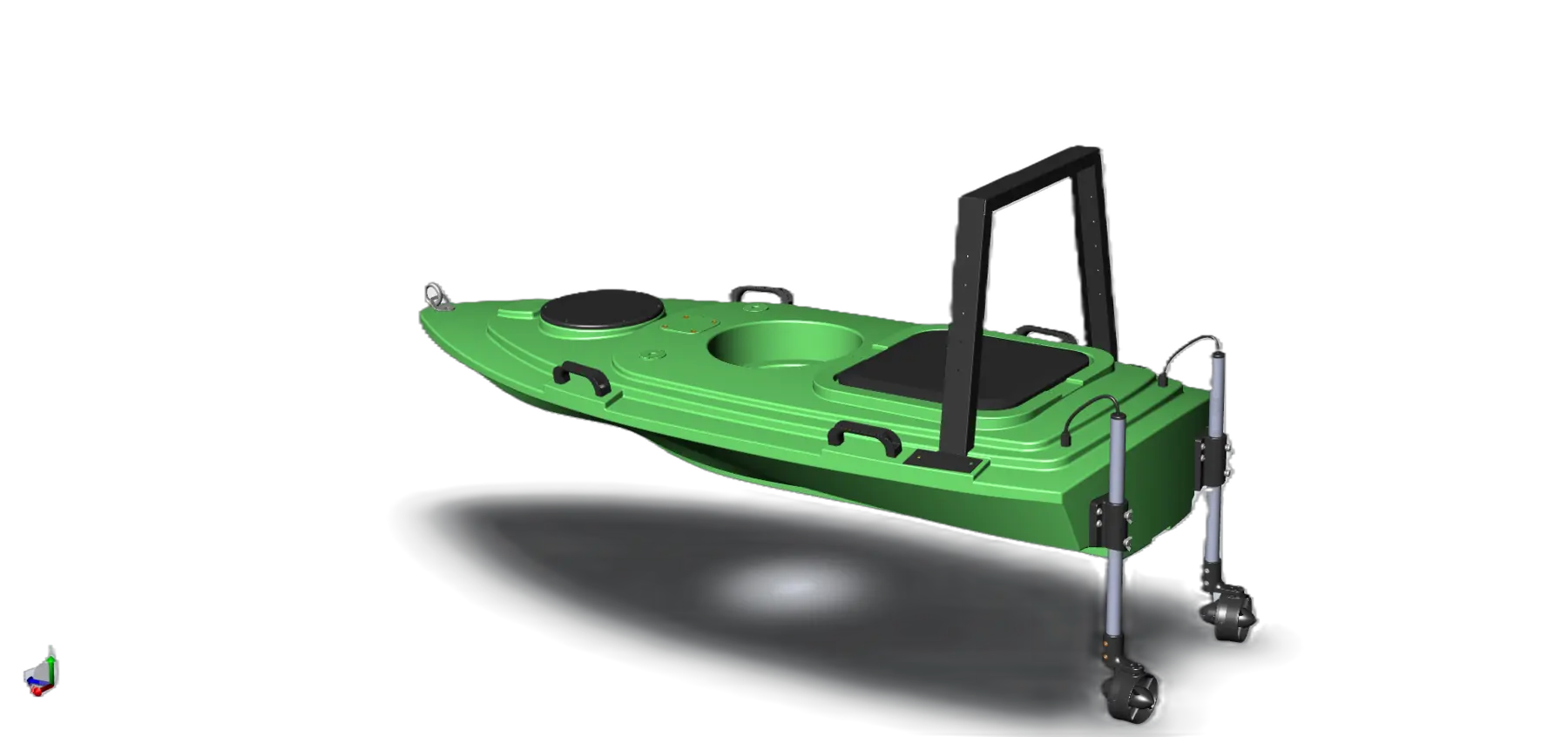
Voyager 1800 configured with dual thrusters
Voyager 1800 single-hull USV with two electric thrusters
01 / Compact electric platform Current integration priority

Voyager 1800

Voyager 1800 is Roboteering’s immediate electric integration platform. Its compact HDPE hull supports dual electric propulsion, protected internal equipment and payload installation through a central moon pool.

Dimensions
1,800 × 725 mm
Empty weight
Approximately 25 kg
Propulsion
Dual electric thrusters
Payload access
9-inch central moon pool
Control
Nautix with embedded companion-computer option
Development use
Integration, trials and repeatable payload deployment
Ask about Voyager 1800
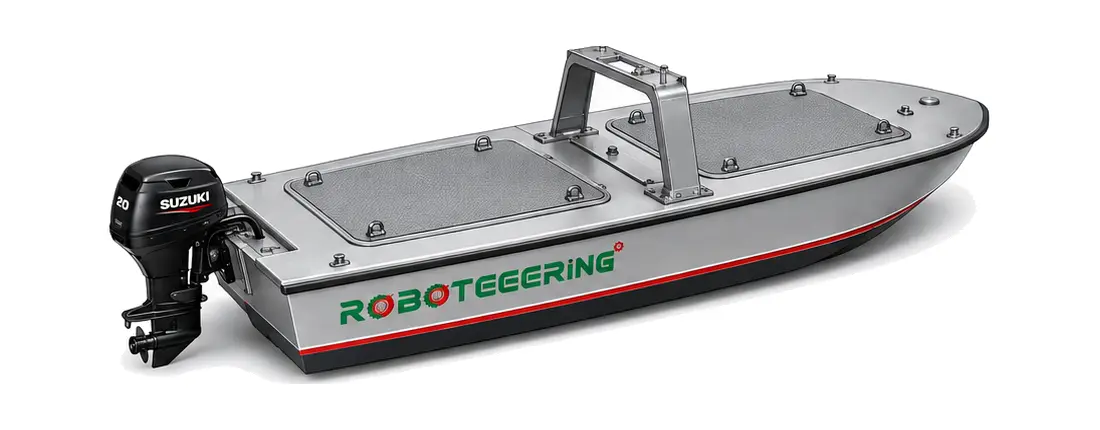
Voyager 4200 aluminum platform with remote-control outboard
02 / Outboard-powered flagship Prototype development

Voyager 4200

Voyager 4200 extends the Roboteering control ecosystem to an aluminum vessel with a remote-control outboard. Nautix provides autonomy while HSC and ETSC manage steering, throttle and gear selection.

Dimensions
4,200 × 1,650 mm
Empty weight
Approximately 150 kg design basis
Propulsion
20 HP remote-control outboard
Steering
Hydraulic steering with HSC interface
Operating target
Up to 12 NM near shore
Environmental target
Sea State 3 minimum
Ask about Voyager 4200
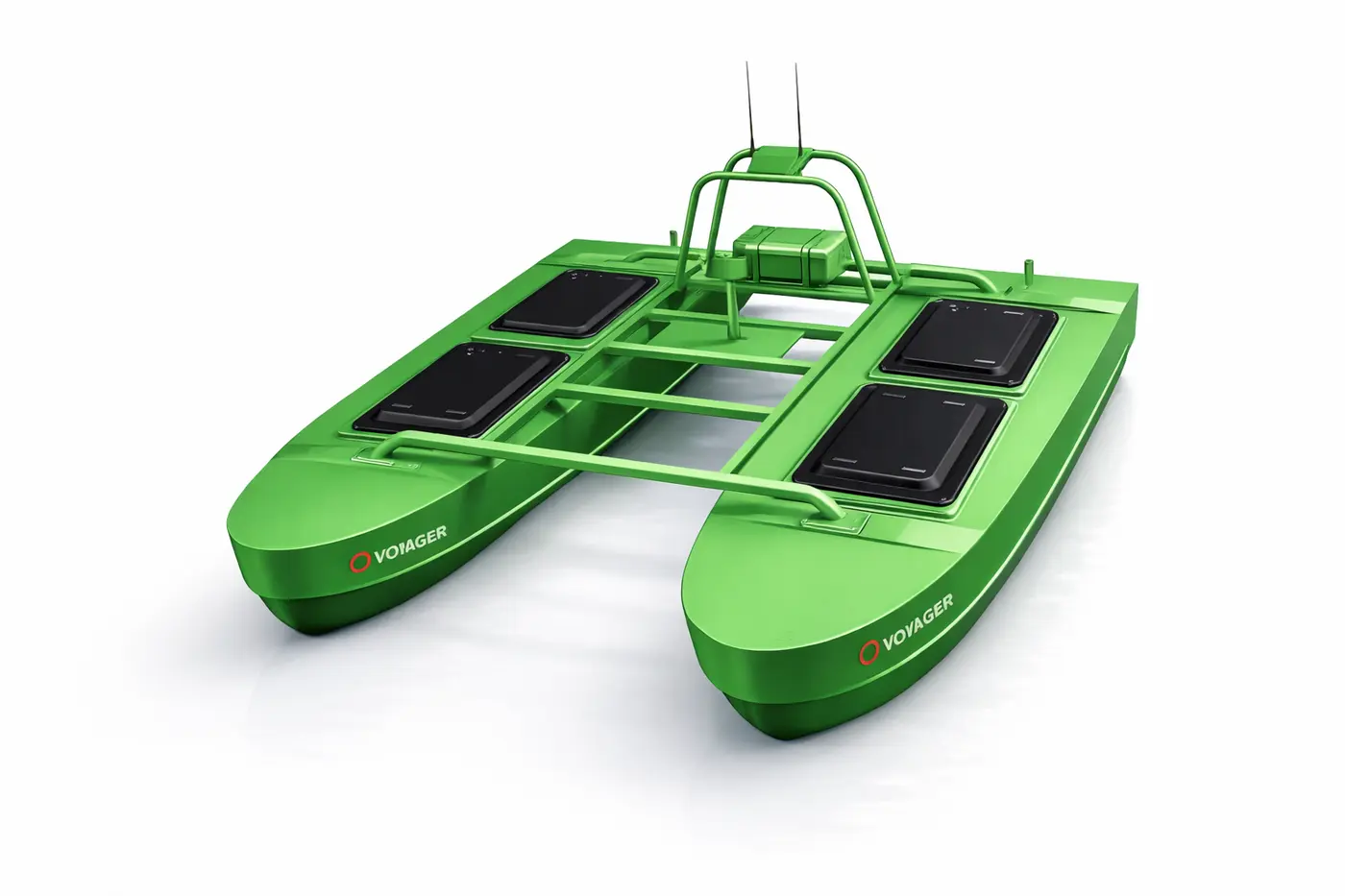
Voyager 2500 catamaran platform rendering
03 / Catamaran roadmap platform Development deferred

Voyager 2500

A stable catamaran concept for larger payloads and expanded working deck area. Voyager 2500 remains on the product roadmap while engineering resources focus on Voyager 1800 integration and Voyager 4200 outboard control.

Dimensions
2,500 × 2,340.5 mm
Empty weight
Approximately 90 kg design basis
Hull form
Catamaran
Architecture
Expanded working deck and modular payload arrangement
Status
Future development roadmap

Shared architecture

Common building blocks across the Voyager family

Platform size and propulsion change, but the control philosophy remains consistent. This reduces redesign work between prototypes, mission configurations and larger vessels.

01Voyager platformHull, protected equipment volume and payload mounting.
02Nautix controlAutonomy, safety inputs, logging and vehicle interfaces.
03Propulsion controlVortex electric drive or HSC and ETSC for an outboard.
04ShoreLink + CloudLocal access, wide-area telemetry and fleet visibility.
A / MODULAR

Payload-ready

Power, data and mechanical interfaces are planned as part of the platform architecture.

B / SERVICEABLE

Field access

Equipment placement and harnessing support inspection, replacement and recovery.

C / SCALABLE

Shared control logic

Common interfaces simplify movement between electric and outboard-powered vessels.

D / DOCUMENTED

Repeatable builds

Connector maps, configuration records and acceptance checks support consistent integration.

Which Voyager fits your mission?

Share your payload mass, endurance target, operating area and launch constraints. We will help define a suitable starting configuration.

Discuss your mission